

Blog (Latest News, Info and Updates)
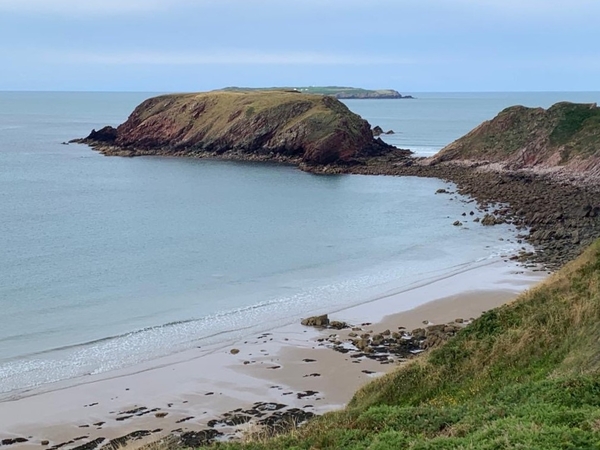
Light from the Edges: Why our pilgrimages follow in the footsteps of the Celtic Saints
Saturday 17th January 2026
Jane Moffett
Christianity reached Britain in the late first or early second century and took root through the quiet witness of believers whose faith was formed in hardship, isolation, and lives lived on the land. From the beginning, British Christianity grew not through power or persuasion, but through prayerful presence and lives shaped by devotion.
For the early missionaries, monks, and hermits, the landscape was not a backdrop but a teacher. Influenced by Eastern desert spirituality, they sought wilderness, coast and island as places of encounter with God. In solitude, they learned attentiveness; in simplicity, dependence. Paradoxically, it was from these remote places that faith spread, carried not by force but by example.
The Celtic saints of the fifth and sixth centuries, Patrick, Columba, David, and many others, understood that walking away from the centre could draw them closer to the heart of God. They prayed where sea meets shore, where stone meets sky, where the rhythms of creation shape the rhythms of the soul. These were thin places, where heaven felt close and God’s presence could be sensed in wind, water and silence.
St Patrick’s journey in Ireland was marked by danger, displacement, and deep trust in God. His writings reveal a pilgrim sustained by prayer, learning to listen for God’s voice in loneliness and uncertainty. Patrick’s faith shaped communities that would later influence Britain, binding the islands together through shared prayer and pilgrimage.
St Columba’s life was one of purposeful exile. Leaving Ireland, he settled on the small island of Iona, embracing its isolation as a place of renewal. From this edge of the known world, prayer and hospitality flowed outward. Iona became a place of learning, healing and sending, reminding pilgrims that what is begun in silence can echo far beyond it.
In Wales, St David taught a way of life rooted in humility, discipline and joy in hard work. His community at Mynyw, now St Davids, stood at the western edge, where land gives way to sea. Pilgrims were drawn there not by grandeur, but by the holiness of a life lived simply and faithfully. Even today, the journey there feels as important as the arrival.
Walking Faith
The Celtic saints did not impose belief; they embodied it. They walked the land slowly, attentively, trusting that God was already present ahead of them. In following their paths, pilgrims today are invited into the same openness and trust.
As you walk these ancient routes with us, along coastlines, across hills, between stones worn smooth by centuries of feet, you join a long procession of pilgrims. The paths you tread were once prayers in motion, carrying faith from place to place. Christianity in these islands grew from the edges inward, shaped by those who listened deeply and walked humbly with God.
There is something profound about walking where prayer has soaked into the land, about letting the pace of the body teach the pace of the soul. The legacy of the Celtic saints invites us to rediscover faith not as something to grasp, but as something to receive. In the quiet of the path, the rhythm of walking, and the vastness of sea and sky, the Light still comes from the edges.
Experience the Celtic ways with Journeying in 2026. To discover more simply go to the ‘Journeys 2026’ and ‘Day Walks’ pages of this website.